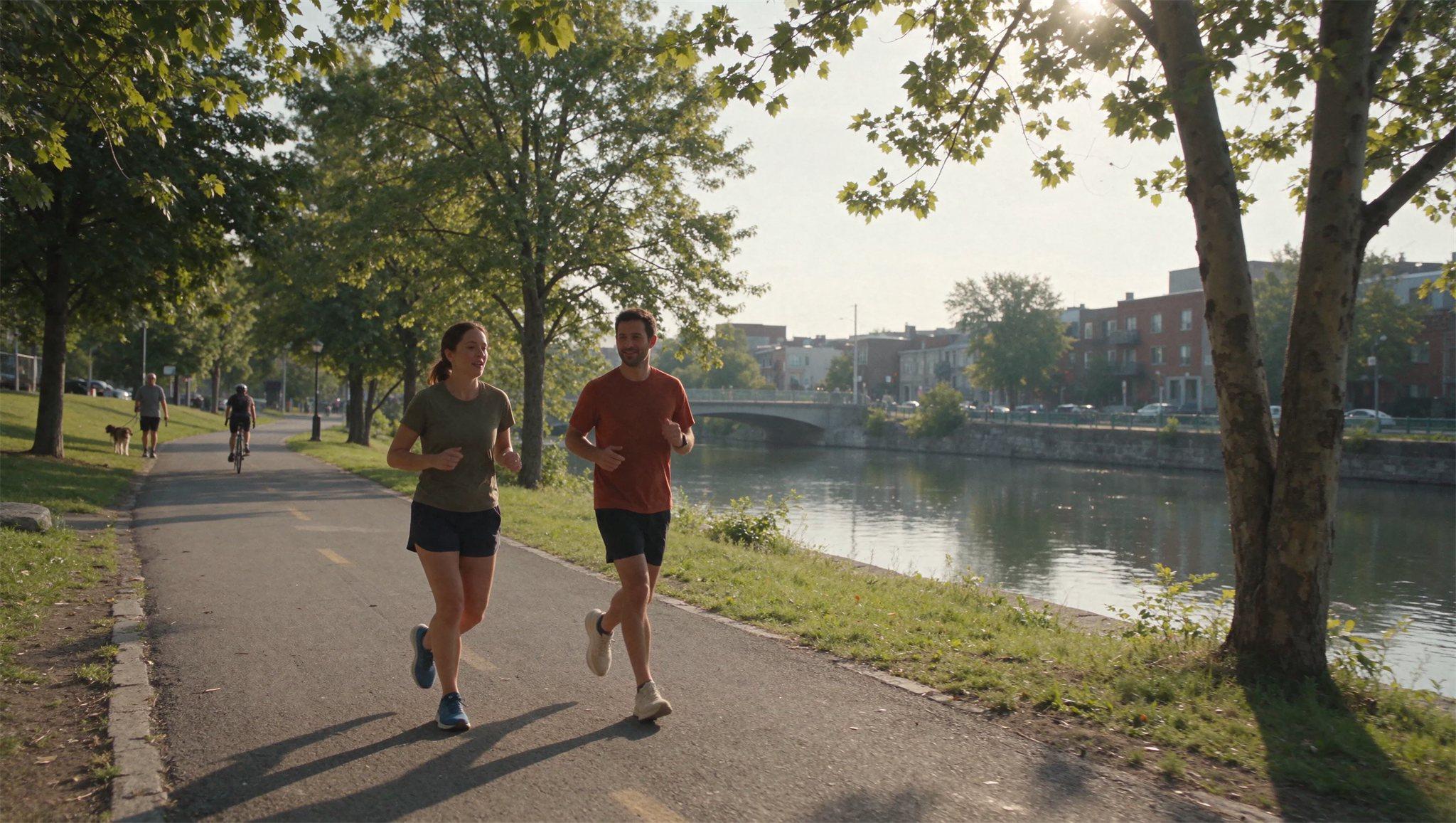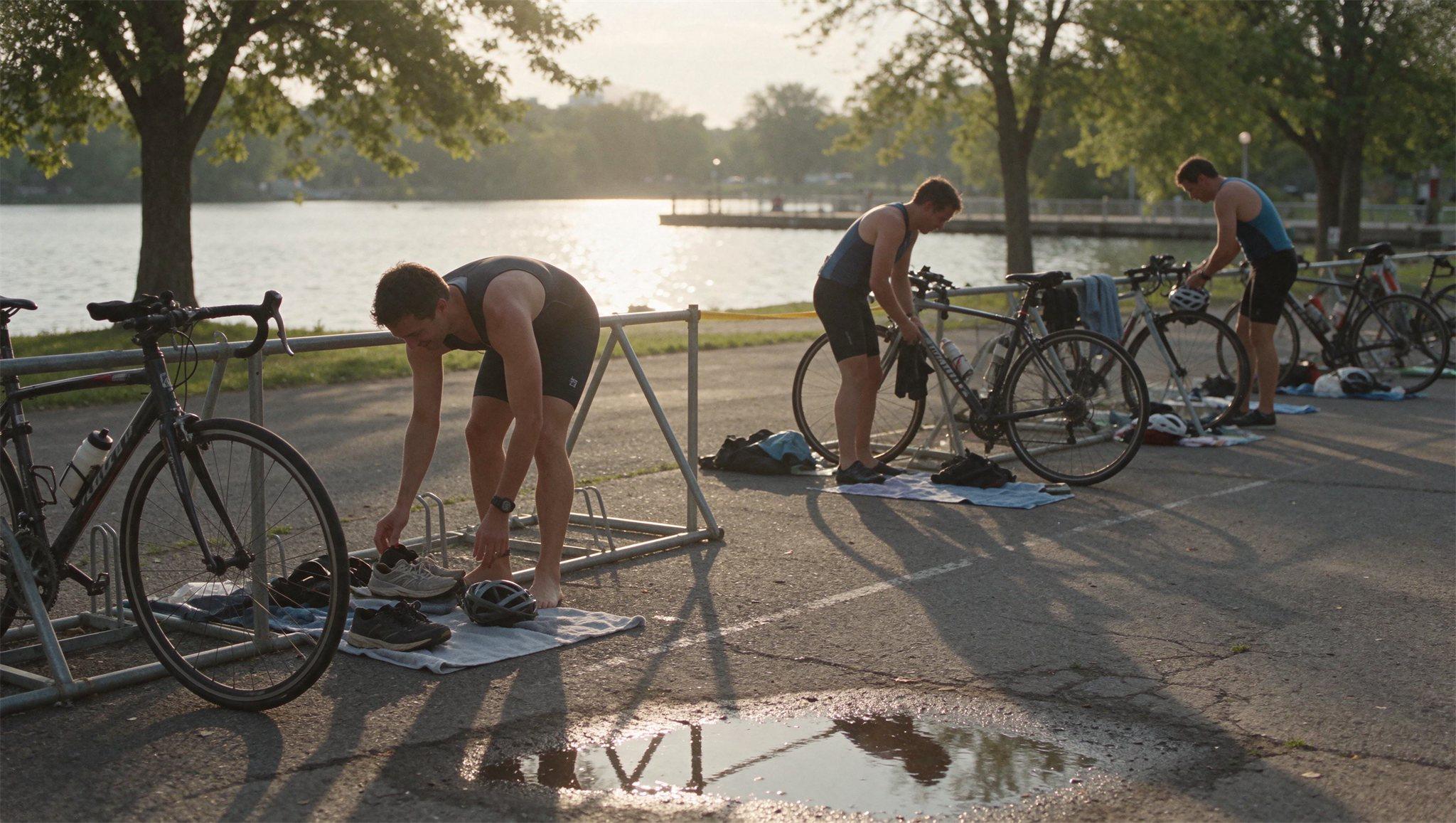
A sprint is a common first triathlon, and for good reason: short enough to fit around a job, long enough that you want a plan. Here’s what one looks like, and what it doesn’t have to.
The distances
A sprint is a 750 m swim, a 20 km bike and a 5 km run, done back to back.1 Individual races can vary a little.
| Race | Swim | Bike | Run |
|---|---|---|---|
| Super sprint | 400 m | 10 km | 2.5 km |
| Sprint | 750 m | 20 km | 5 km |
| Standard | 1.5 km | 40 km | 10 km |
How long, and how many hours
Beginner plans usually run about 8 to 12 weeks.2 3 On hours, one coaching site puts a sprint at roughly 4 to 8 hours a week spread over 4 to 6 days, though a checklist in the same article says to commit to under 6.3 The gap is real, and it probably depends on where you’re starting from and whether you want to finish or to race.
USA Triathlon says that one to two workouts per sport per week can work well when you’re getting started, and that you should take at least one, if not two, days completely off.4 If you can’t yet swim a couple of lengths comfortably, expect to need more time, and a few lessons first help. That last part is coaching opinion, not research.
A sample week
Here are two ways to lay out a week, Monday first. The Cleveland Clinic publishes a sample week with two swims, one bike, one run and a brick on Sunday, and two rest days.2 A layout with two sessions in each sport is another common way to do it.
How the weeks are shaped
Many plans start with a few easy weeks to build a base, then build up the volume and the harder sessions, then hold a short peak before they ease off. For a sprint, coaches commonly advise a lighter last week, with a little speed kept in. USA Triathlon suggests spending about 60 to 80% of your total training time at an easy to moderate effort, around 5 or 6 out of 10.4 That’s guidance, not a trial result, but it’s in line with common coaching practice.
Practise open water before race day
Many sprints swim in a lake or a river, and that feels nothing like the pool: no wall to push off, colder water, and a crowded start. Coaches commonly advise that race day shouldn’t be your first open-water swim. Practise with other people, and stay near the shore at first.
There’s a safety reason too. A US case series of 135 sudden deaths, cardiac arrests and trauma-related deaths in triathlons between 1985 and 2016 found that most happened during the swim, and mostly in middle-aged and older men.5 A case series covers triathlons in general, not only sprints, and can’t tell you your own risk, but it’s a good reason to swim with company. This is general information. If you have a heart condition or any doubt about your health, see a doctor before you train for a race.
How Kovra builds one
You tell Kovra how many hours a week you have, from 4 to 30, and the plan builds toward them rather than starting there. The Sprint tile suggests 4 to 7. How many sessions a week gets depends on that week’s hours: up to 5 hours is one swim, one ride and two runs, and up to 8 is two swims, two rides and two runs. Strength comes in from about 6 hours in most weeks. A lighter week can get fewer or shorter sessions.
The season runs through prep, base, build and peak, then a taper, and a short plan loses prep or peak weeks first. Lighter weeks come after every two loading weeks for beginners and for athletes 50 and over, and after every three for everyone else, except just before the peak. A sprint’s taper is one week, and that week is the race week, at about 55% of your peak week’s hours. If you give a beginner fewer than about ten weeks for the race (about six for others), Kovra tells you the plan is short for it when you set it up.
At these hours, a ride that ends with a short run shows up only in the peak weeks, and only once your weeks have two rides in them. Kovra plans pool swims only, so practise open water yourself, with others. And it doesn’t promise a rest day each week, so pick your training days with one in mind.